
Your best player is doing everything right.
Staying late. Getting extra shots. Showing you every day that the fire is there — that the want is real. And still leaving the gym with 60 clean shooting repetitions.
That is not a talent problem. That is not a motivation problem.
That is a design problem.
And it is happening in serious clubs across Europe right now — in programs that genuinely believe in development, run by coaches who genuinely care — while the gap between those players and the ones at the very top of the game quietly, invisibly, relentlessly widens.
What Barcelona Understands That Most Programs Don't
Šarūnas Jasikevičius doesn't talk about development in abstract terms.
The former FC Barcelona Bàsquet head coach is direct about what actually builds players at the highest level of European basketball: efficiency, intentionality, and the complete elimination of wasted time in training. Not occasionally. Not when the schedule allows. Every single day.
That is not a philosophy. It is a standard. And the difference between those two things is enormous.
A philosophy is what you believe. A standard is what you enforce at 7am on a Tuesday in February, when nobody is watching and the game is eleven weeks away.
Barcelona runs a daily development standard. Most European clubs run a development philosophy. And the players produced by each environment are not the same players.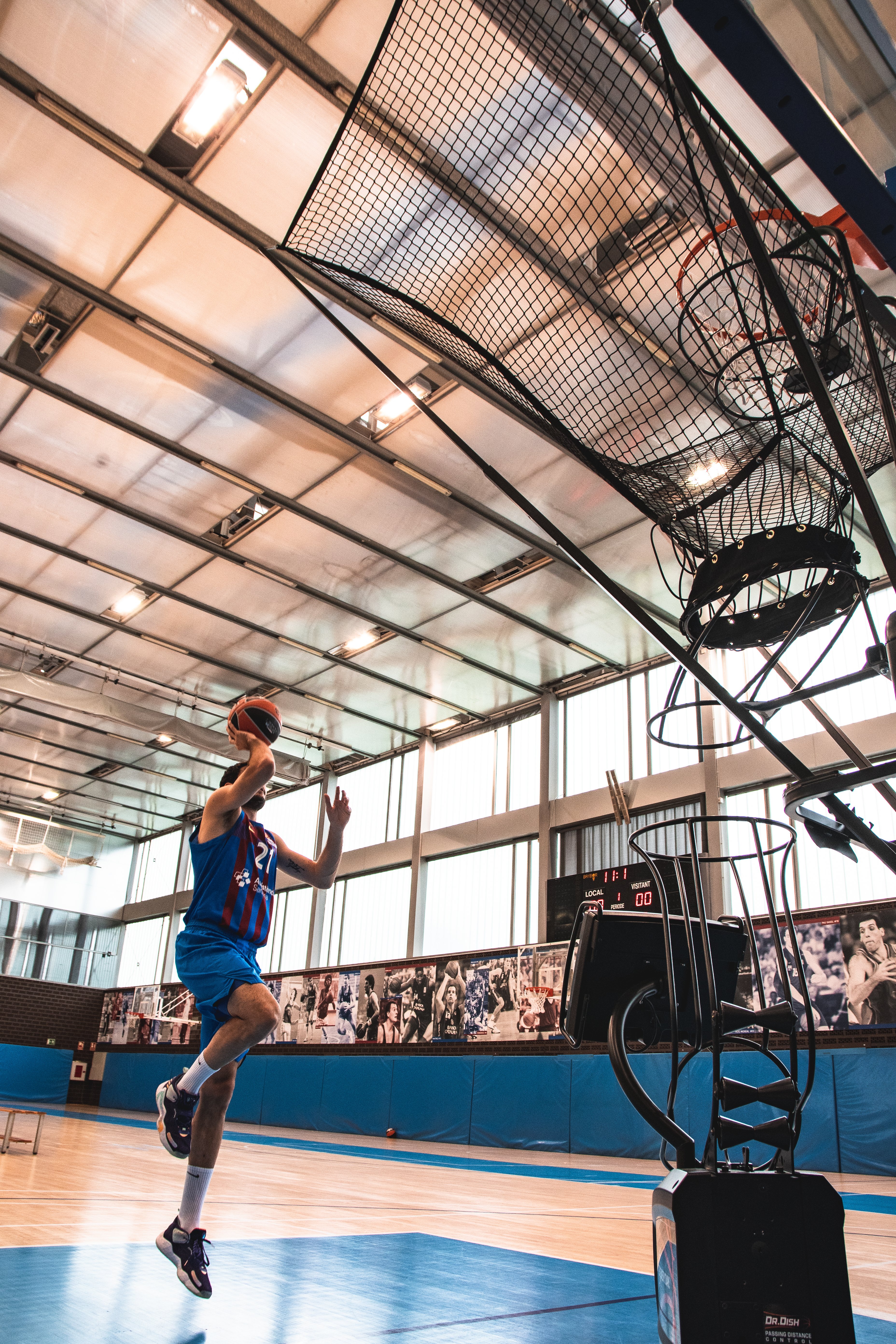
The Number That Changes Everything
Here is the question most coaches haven't actually answered:
How many clean, game-speed shooting repetitions does your best player get in a typical session?
Not touches. Not walk-throughs. Shots that count — with footwork, with decision-making, with a ball returned quickly enough to maintain rhythm.
For most clubs across Europe — even serious, well-resourced clubs — that number sits somewhere between 60 and 100 on a structured day.
One player leaves practice with 80 shots. Another leaves with 400. Run that four times a week — and those two players are no longer in the same development system.
The gap does not announce itself. It compounds silently — one session at a time — until the moment it becomes undeniable on the floor.
And the player doesn't just fall behind. They lose the window where development actually compounds. That window does not stay open. Every low-rep session is a session that doesn't come back.
The Design Behind the Standard
Elite development programs at Barcelona's level don't produce these numbers through effort alone. They produce them through design.
Three things are non-negotiable in environments like Barcelona's:
— Every player gets individual development time — protected, not optional
— Coaches coach — they are not rebounding or managing equipment
— Accountability is visible — not assumed
None of this is complicated. It's just enforced.
Development is not squeezed into the margins of team preparation. It is protected at the schedule level. The coaching work stays with the coach — not because of extra hours, but because the mechanical work is handled by infrastructure built to handle it. And progress is measurable and tracked in real time, not estimated at the end of a season and hoped for at the start of the next one.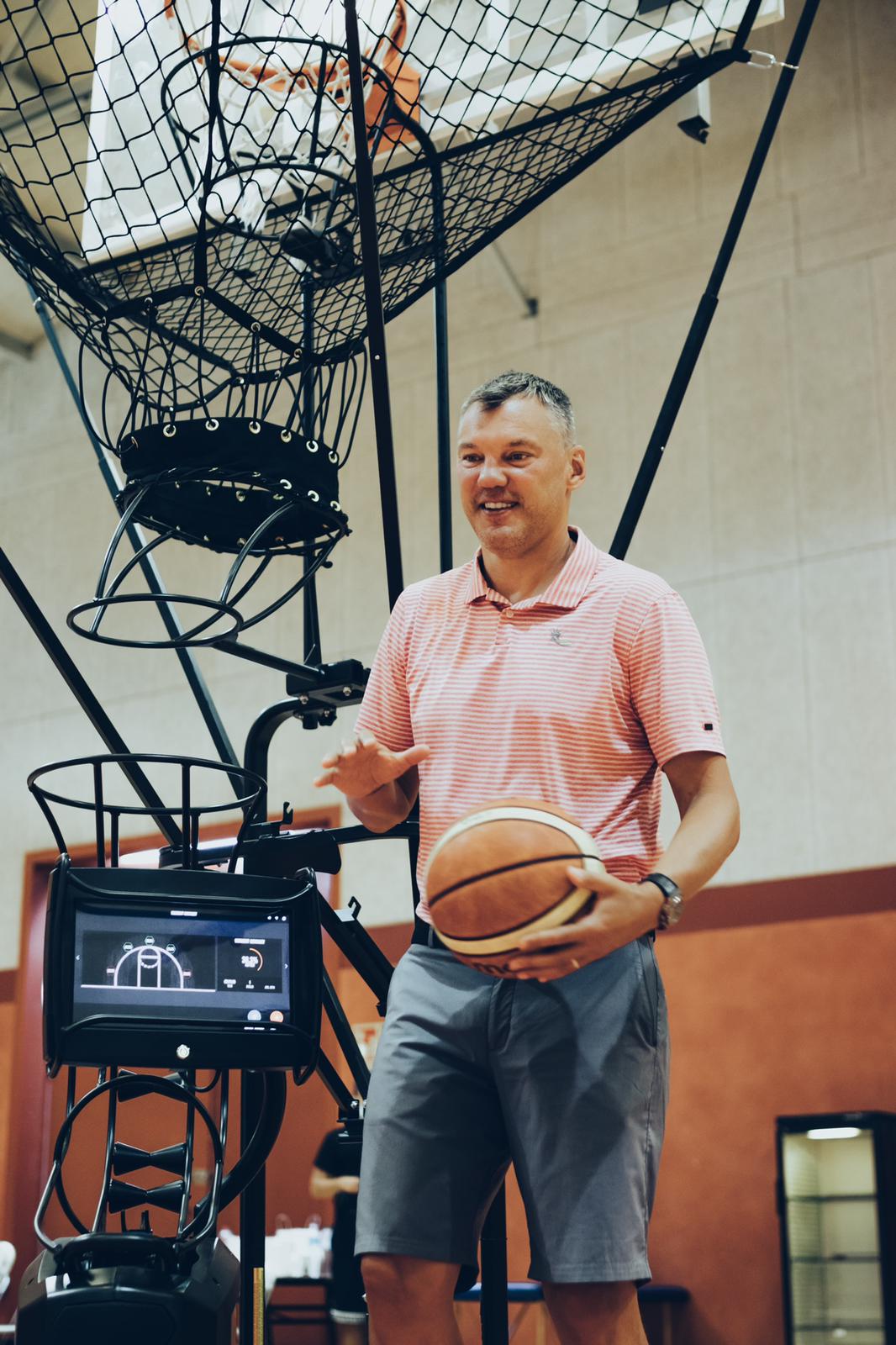
What Frees the Coach to Actually Coach
Dr. Dish is the training infrastructure used by FC Barcelona Bàsquet — and the only FIBA-endorsed shooting machine in the world, with that endorsement renewed in 2025.
But the reason it matters to a program like Barcelona's has nothing to do with features.
Every minute a coach spends rebounding is a minute that doesn't come back.
That's the number that never appears in a session plan but shows up in every player who didn't develop as fast as they should have. The coach chasing balls at the baseline is not watching footwork. Not seeing the shot a player takes when they think no one is paying attention. Not building the relationship that turns good advice into genuine change.
Dr. Dish doesn't replace the coach. It returns the coach to the work that only they can do.
The machine feeds the ball. The coach develops the player.
More than 1 million shots are logged through Dr. Dish daily, across programs worldwide. The National Cups this year told part of this story clearly: eight Dr. Dish clubs won championships across eight European countries in a single weekend — at every level of the European club system, from professional programs to the academies building the next generation.
The Standard Is Not Reserved for Barcelona
The daily development standard that Jasikevičius and his staff started at FC Barcelona is not exclusive to EuroLeague budgets or professional rosters. The infrastructure that makes it possible exists. It is available to serious clubs at every level of European basketball.
The gap between a program that has it and a program that doesn't is not a gap in talent. It is not a gap in coaching quality or player motivation or commitment to the work.
It is a gap in design.%20(edited).jpg?width=600&height=1066&name=243357093_563003514977029_2718840960393903068_n%20(1)%20(edited).jpg)
The Uncomfortable Question
If your best player is leaving practice with 60 shooting reps when the infrastructure exists to give them 300 — that is not a talent problem.
That is a decision. And it's one your players feel — whether you acknowledge it or not.
The fire is in your players. It has been from the beginning.
The question is whether the environment you've built is designed to feed it — or designed to survive it.
#FeedYourFire
To learn how serious European programs are building daily development standards — and how Dr. Dish fits as infrastructure in that work — connect with your regional Dr. Dish partner.