
It's 9:47pm.
Your best player is still in the gym.
Extra shots. Extra time. No one asked them to stay.
You watch for a moment...and you feel it. That quiet pride. This kid has it.
And you are completely right.
That’s what makes this so hard to say:
Working hard in a low-rep environment doesn’t close gaps.
It locks them in.
The Rep Most Programs Never Count
Here’s what a typical European club session actually produces.
A player waits in a drill. They get a touch. They move on.
Another wait. Another touch.
At the end of a 90-minute session; if you counted, which almost no one does, your best player got somewhere between 60 and 120 meaningful shooting reps.
That’s not a bad session.
That’s just the reality of what’s possible when a coach is also the rebounder, the organizer, and the person trying to run the drill at the same time.
Now consider this:
Right now, across Europe, there are clubs giving that same player 400, 500, sometimes 600 reps per session.
Same talent level.
Same effort.
Different infrastructure.
In three months, those players are not the same player anymore.
One player leaves practice with 80 shots. Another leaves with 400.
Multiply that by four sessions a week — and now you’re not running the same program anymore.
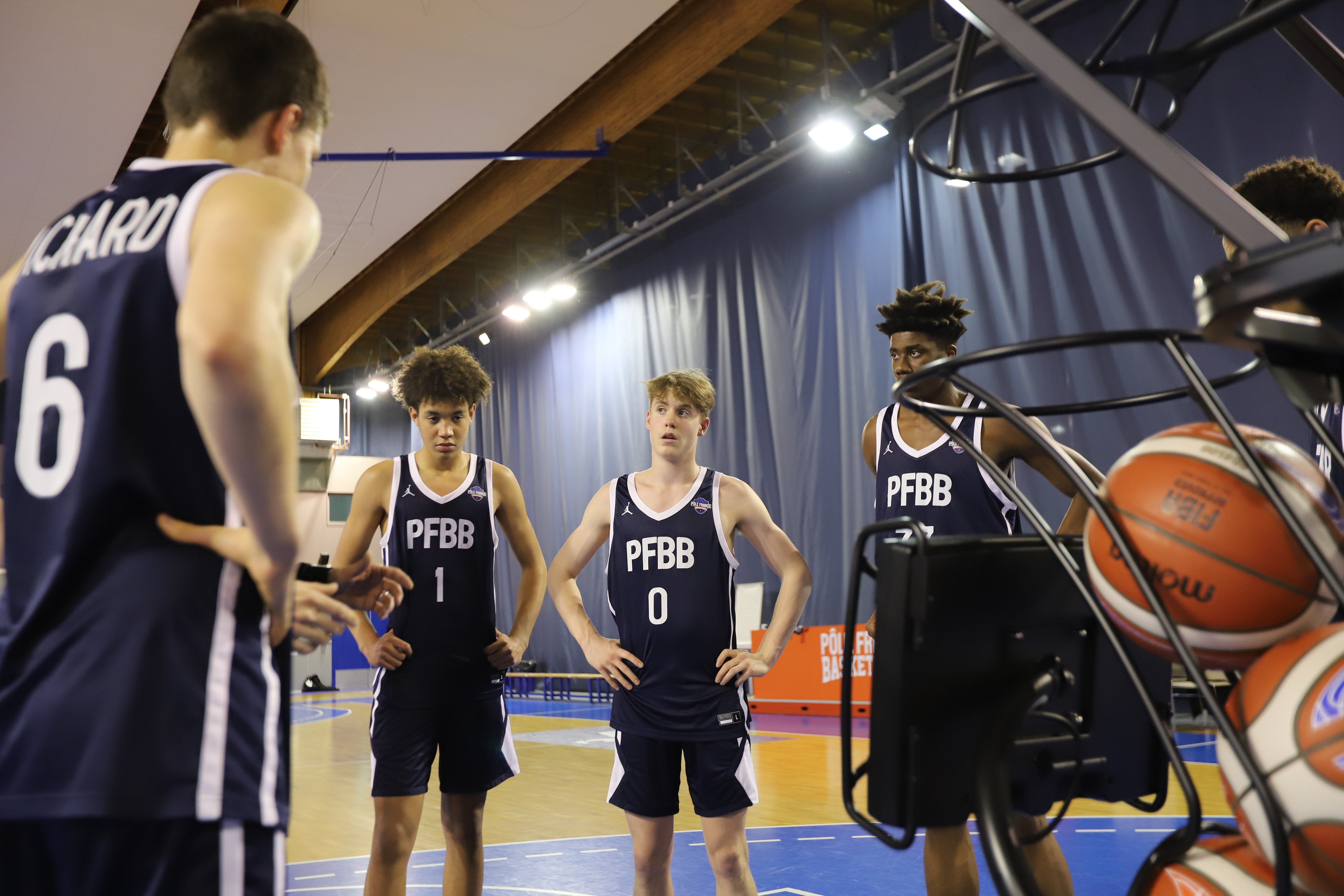
What the Clubs at the Top Already Know
This isn’t theory. It’s already settled at the highest levels of European basketball.
At ALBA Berlin, head coach Israel González describes player development not as a philosophy — but as a system of daily repetition and measurable accountability. Not occasional intensity. Daily.
At FC Barcelona, Šarūnas Jasikevičius doesn’t talk about working harder. He talks about eliminating wasted time. Because in elite development, every minute a player isn’t getting a rep is a minute that cannot be recovered.
And Jean-Aimé Toupane, head coach of the French Women’s National Team, put it more directly than any of us would dare:
“This tool has revolutionized basketball.”
Not improved it. Not helped it.
Revolutionized it.
These are not testimonials. They are signals. The clubs that compete at the highest level in Europe have already decided that repetition is infrastructure, not a bonus.
The Tax Your Best Player Is Paying Right Now
Here’s the part that’s uncomfortable to sit with.
The player staying late? The one putting in the extra work?
They are developing. Just slower than they have to.
Every low-rep session is a development tax your best player is paying for your system.
Not because anyone failed them.
But because the environment couldn’t give them what their effort was asking for.
Confidence in basketball isn’t taught in speeches. It isn’t built through motivation.
It’s built through volume. Done right, tracked, and repeated until a player doesn’t hope the shot goes in.
Until they already know.
And right now, somewhere in your country, a player with less talent than yours is becoming a better shooter.
Not because they want it more.
Because they’re getting more of the one thing that actually builds it.

When a System Replaces the Guesswork
This is the shift that changes what a program can produce.
Not more time. Not more effort. A different structure entirely — where repetition becomes measurable, development becomes visible, and a coach is free to actually coach.
Dr. Dish makes that shift possible.
Players get up to 5x more shooting repetitions in the same training time. Every rep tracked. Every drill structured and repeatable. Over 1 million shots are logged daily worldwide; not because programs have more hours, but because they’ve built an environment where reps compound.
And this isn’t reserved for elite clubs.
Bayern Munich and Real Madrid use it. So do hundreds of clubs across Europe who decided that developing players at the pace their effort deserves is not optional.
It is the job.
The Question That Doesn’t Wait
The development window your best player has right now — it is open.
Not forever. Not even for long.
Every session that passes with 80 reps instead of 400 is a session that does not come back. The work is already there. The question is whether the environment is worthy of it.
Some programs will build one.
Some programs will watch their best players leave for one.
The gap between those two programs isn’t talent.
It’s a decision — and the only one that matters is the next one you make.
#FeedYourFire